
India’s roads carry morning vegetable markets, school runs, processions, food carts, and the movement of a few hundred million people every day. They also carry dust, plastic, and the residue of neglect that quietly becomes normal.
Road cleaning sounds like a basic civic function, the kind you notice only when it stops. It isn’t. It is the single largest spending line in India’s clean air programme, and one of the least specified services a city buys.
Sweeping a road is not the same as cleaning the air
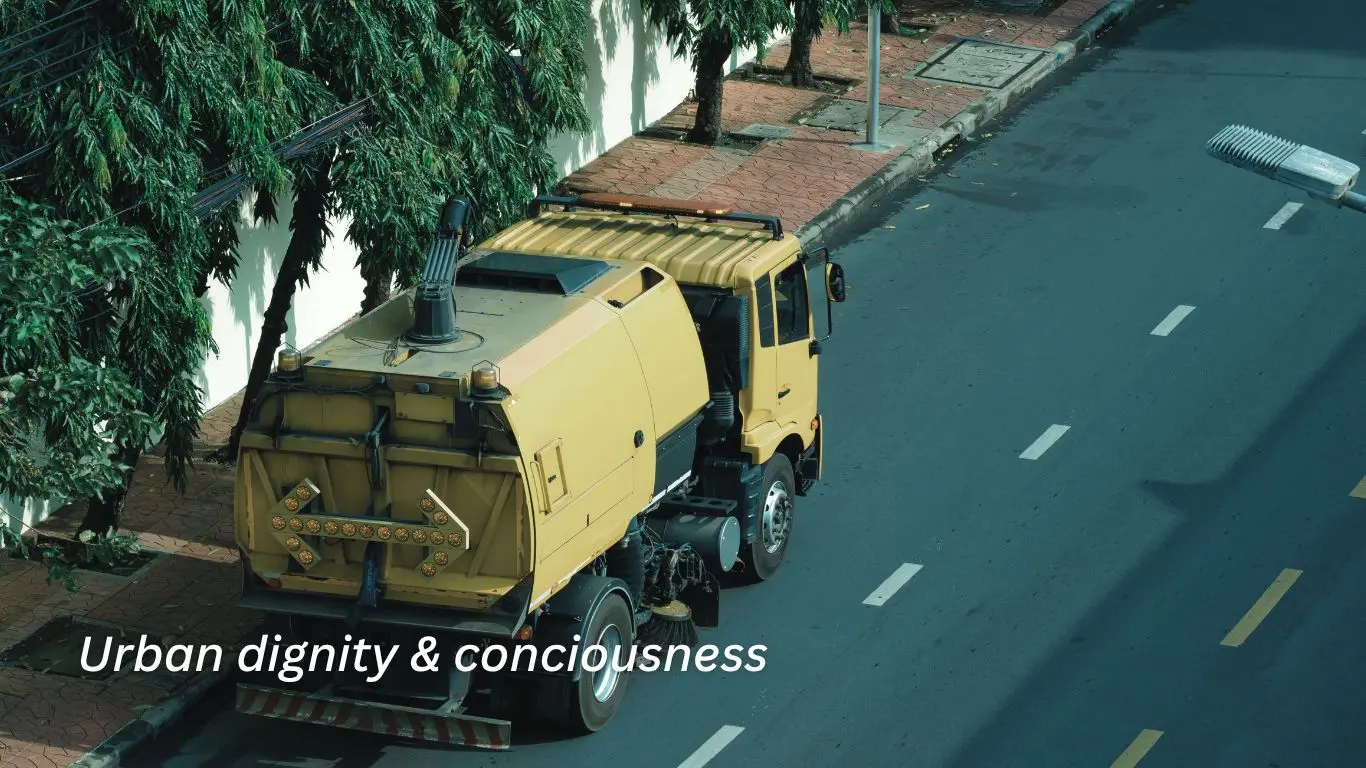
The research on this is genuinely mixed, and some of it runs backwards. Conventional broom sweepers have been measured raising airborne rather than lowering it, because a rotating broom lifts fine particles and grinds larger ones into smaller ones. The road looks swept. The air is worse than before the machine arrived.
Sweeping does reduce airborne dust, but only under conditions most contracts never write down: suction rather than agitation, water applied during the pass rather than at the depot, and a frequency high enough that silt does not rebuild between visits. Miss one and you have bought appearance, not outcome.
Anyone selling you road cleaning as clean air without those three conditions is either not reading the research or counting on you not to.
What clean roads actually deliver
Street waste does not stay on the street. It breaks down, washes into stormwater drains, and clogs them. Come monsoon, the same waste is the reason a junction floods. Decaying organic waste and standing water near blocked drains support pests and disease vectors. These are drainage and public health outcomes, and they are directly attributable to whether shoulders and drains were cleaned before the rains, not after.
The economics follow from that. Blocked drains damage road surfaces faster. Flooding stops commerce. Marketplaces that look unclean lose footfall. Heritage and tourist areas trade on what visitors saw and smelled. None of this needs an air quality claim to be true.
There is also the question of who does the work. Cleaning that is planned, mechanised where the road justifies it, and equipped with proper safety gear is safer work than cleaning that is not. That is a real outcome, and it is worth stating plainly rather than leaving it as an afterthought.
Cleaning is a system, not an activity
Here is where most programmes fall down. They buy effort without engineering.
A road cleaning service that can be held to account has five parts: defined routes and schedules with visible accountability, mechanised sweeping on the corridors that justify it, drain and shoulder cleaning timed to the monsoon rather than the invoice cycle, segregation and disposal so cleaned waste doesn’t simply move to an unmanaged landfill, and monitoring that produces evidence, from GPS-tracked vehicles to audits and citizen reports.
When cleaning is run as a system, you can see whether it worked. When it isn’t, the work is endless and the trust runs out.
What you can actually do
- Stop normalising litter. Carry your waste until you find a bin. Refuse single-use plastic where you have a choice.
- Join local clean-ups, but don’t mistake them for the fix. A clean-up is a demonstration. A contract is a system.
- Engage your ward office with specific questions rather than general complaints. Ask for the sweeping schedule on your road. Ask when drains near you were last cleaned and when they will be cleaned before the monsoon. Ask what happens when a machine breaks down.
- Push businesses to keep their frontage clean and stop dumping in public corners. Ask for specifications, not just budget. Suction, water, frequency, uptime, and some evidence that the work happened.
Our view
How a city cleans its roads is one of the clearest tests of how it is run. It shows whether planning is real or ceremonial, whether workers are protected or ignored, whether anyone checks the result.
It is also a test for us. The person who throws a cup out of a car window and the municipality that never installed a bin are producing the same street.
Clean roads are not about perfection. They are about priorities, and about being willing to specify what we are actually buying.
Earth Neutral runs mechanised sweeping and solid waste management operations for municipal corporations, ports, industrial estates and large real estate portfolios. Tell us the sector, city and approximate road length, and we will come back with a deployment approach and a commercial structure.