
India placed 176th out of 177 countries on Yale’s latest Environmental Performance Index. Second from the bottom and above Laos. It is the kind of headline that lands as either panic or a shrug.
The ranking is real, and it is also contested. India’s own environment ministry has called parts of the method unscientific, and researchers have pointed out that squeezing a large, low-income country into a single cross-national score, and marking it down for emissions projected decades into the future, tilts the comparison against developing economies. So the headline number is easy to argue about.
Here is the line underneath it that is much harder to argue with. On air quality, India sits at 174th. You do not need an index to confirm that. Anyone who has stood on a city road in winter already knows.
Why “no single fix” isn’t the same as “nothing works”
Air quality is not one problem with one villain. It is vehicles, industry, crop burning, construction, and road dust, all at once. That is part of why it feels hopeless, and it is why no single service, ours included, cleans the air. We would rather say that plainly than sell you a shortcut that does not exist.
But a national score being grim does not mean every piece of it is stuck. Some sources of pollution are national and slow to move, like coal and heavy industry. Those take a generation of energy and industrial change, and it is worth being honest that they will not shift because of a ranking.
Other sources are local, visible, and fixable inside a single budget year. Road dust is the clearest example. It is one of the larger coarse-dust contributors on Indian city roads, the gritty PM10 that settles on your windowsill and lifts every time a bus passes. Unlike a power plant three states away, it sits right in front of the people who breathe it. A city does not need to restructure its economy to deal with it. It needs the right equipment and the discipline to use it often.
What matters now
Here is what we want to be upfront about: dry sweeping or using the wrong method actually worsens dust pollution by grinding particles and kicking fine dust back into the air. A dry rotating broom creates the illusion of a clean road while secretly fouling the air. Measuring the air proves this reality, which we explore thoroughly in Does mechanised sweeping clean the air, or just move the dust?.
There is a catch, and it matters. Cleaning a road the wrong way makes the dust worse, not better. A dry rotating broom lifts the fine particles straight back into the air and grinds the larger ones into smaller ones. The road looks cleaner and the air is dirtier. That is not a marketing line, it is what the measurements show, and we have written about it in detail in *Does mechanised sweeping clean the air, or just move the dust?*
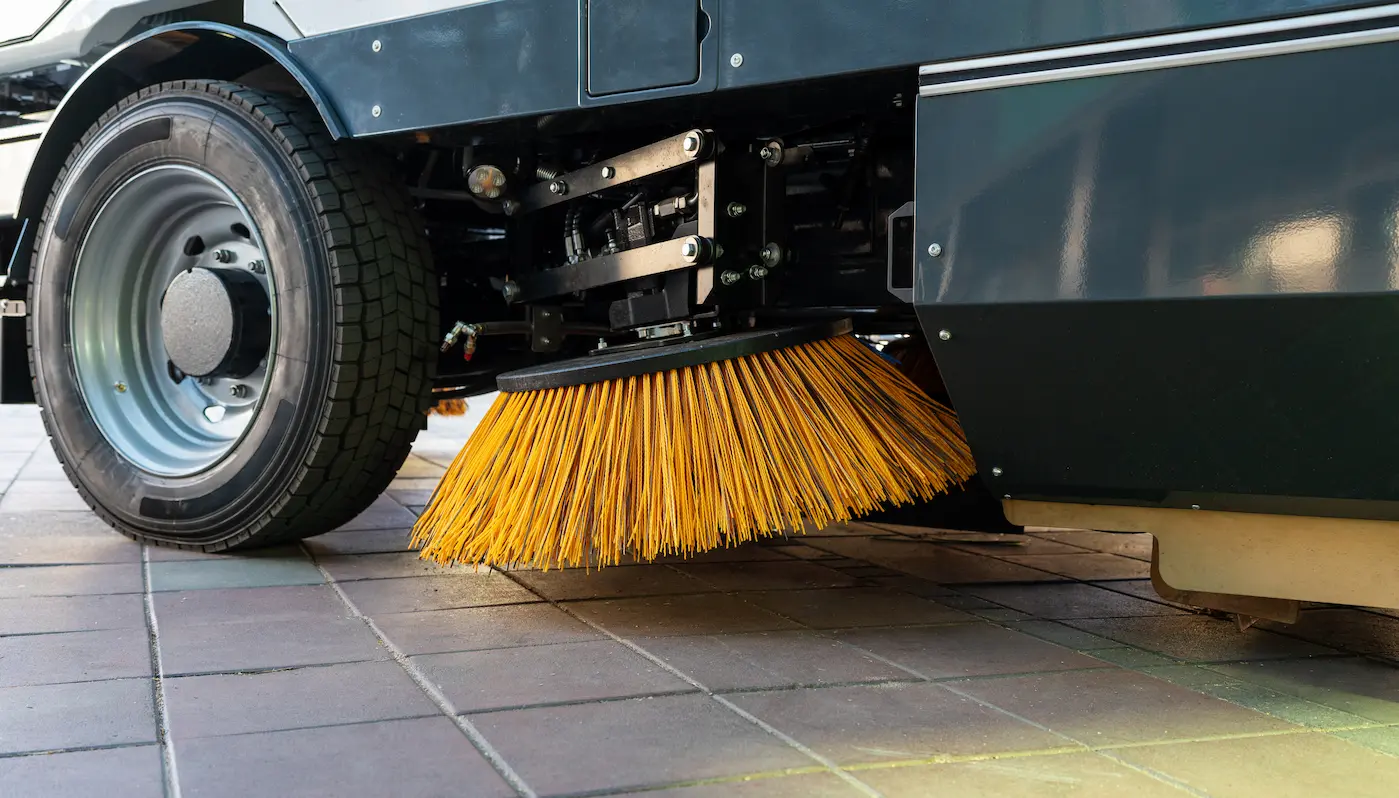
Sweeping only helps when three things are true at once. The dust is captured by vacuum rather than swept aside. Water holds it down during the pass so it cannot become airborne. And the cleaning happens often enough that the silt does not simply rebuild between visits. Miss one of those and you have bought the appearance of clean, not the outcome.
Read that as good news, because it is. It means road dust is an engineering problem, not a mystery. Engineering problems have solutions you can specify, measure, and hold someone to.
What can we do about it
You are not powerless here, and the useful actions are specific rather than heroic.
Do not add to the pile. Carry your waste until you find a bin, and refuse single-use plastic where you have the choice.
Ask your ward office questions it can answer. What is the sweeping schedule on your road? When were the drains near you last cleaned, and when will they be cleaned before the monsoon? What happens when a machine breaks down?
When your city talks about clean air, ask where the money is going. What share of the spend is aimed at sources the city can actually move this year, and does the road cleaning pay for use of vacuum, water, and frequency.
Our view
A ranking is a headline. The work is in the method. India’s overall score will take years of energy and industrial change to move, and pretending otherwise helps no one. But the piece we work on, the dust on the road in front of your home, does not need to wait a generation. It needs the right machine, runs often enough, and checked properly.
That part is solvable now. Cities that treat it as an engineering job rather than a photo opportunity are already proving it. The national number is a wake-up call.
*Earth Neutral runs mechanised sweeping and solid waste management operations for municipal corporations, ports, industrial estates and large real estate portfolios, with more than 13 years and 83+ machines on Indian roads. Tell us the sector, city and approximate road length, and we will come back with a deployment approach and a commercial structure.*
Ref: https://www.downtoearth.org.in/environment/wake-up-call-say-experts-as-india-gets-second-lowest-global-ranking-on-yales-environment-performance-index-also-raise-questions-on-methodology