
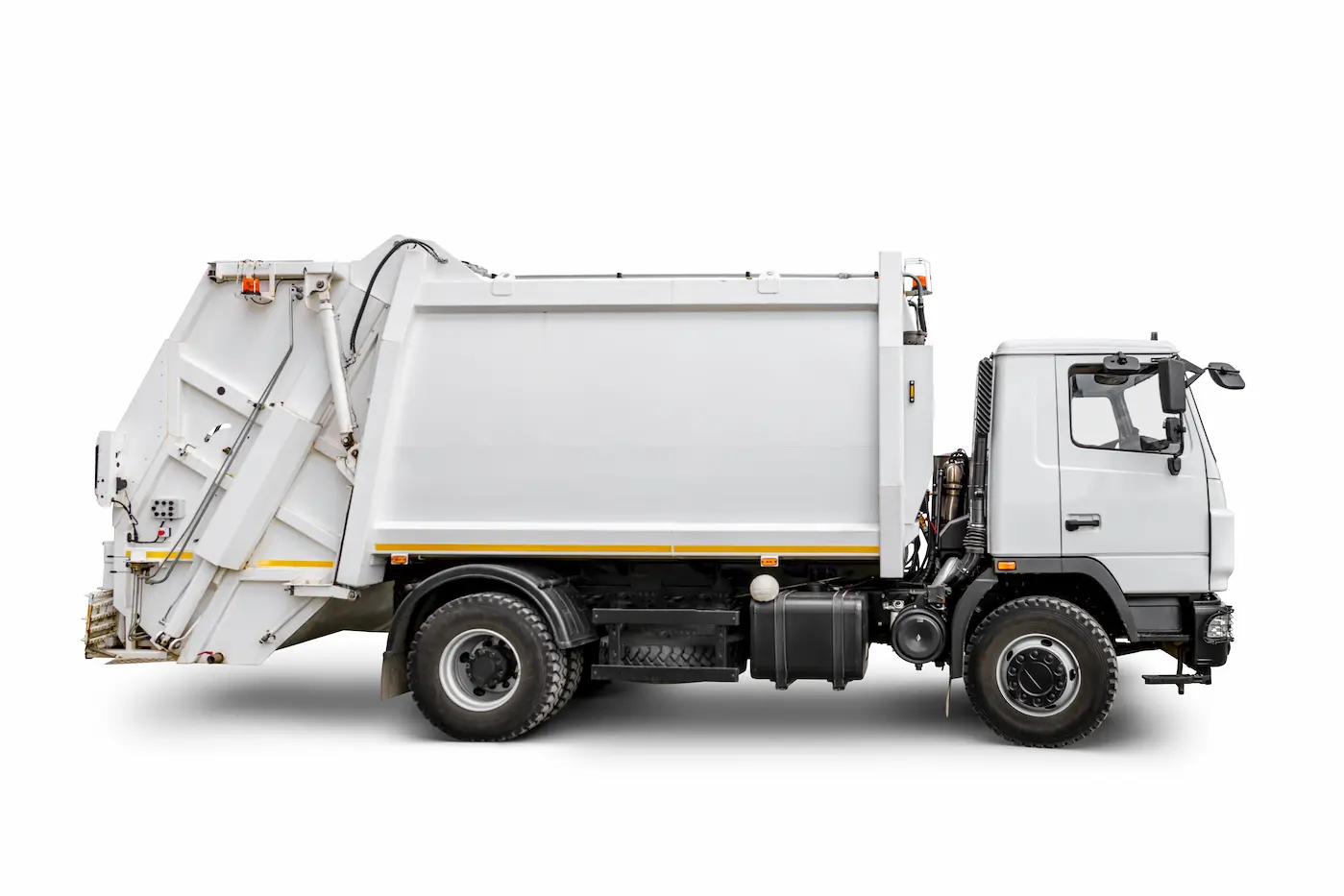
Most enquiries we get for a road sweeper start with the same question. Which machine should we hire? It is a fair question, and the honest answer is that it depends less on the machine than on the site. Road width, what lands on the road, how long the shift runs and how far the machine has to travel all point one way or the other.
We run two types of sweeper across Indian cities, ports and industrial sites. This guide sets out what each one does well, where each one fits, and how to tell which one your site needs before you sign anything.
The quick note
If your roads are narrow, your work is on a single campus or estate, and the problem is fine dust, start with the self-propelled sweeper. If your roads are wide and long, the debris is heavy, or the machine has to move between sites across a city, start with the truck-mounted sweeper. If your site has both kinds of road, you probably need both.
Two machines, two jobs
| Functions | Self-propelled sweeper | Truck-mounted sweeper |
| Suction | Straight vacuum suction | Centrifugal blower |
| Best for | Fine dust, lifted without throwing it back into the air | Heavy debris |
| Hopper | 5 cubic metres | 6.5 cubic metres (about 30% more) |
| Water tank capacity | 620 litres, 4 to 5 hours of dust suppression | 1,000 litres, a full day on arterial roads without refilling |
| Key strength | 3 metre cleaning width, a full lane in one pass, single operator | Up to 15 km per hour, drives itself between sites in a city |
| Typical sites | Dense city streets, narrow lanes, campuses, warehouse sites, IT parks | Highways, ring roads, arterial roads, ports, industrial work |
Start with the road, not the machine
The first thing to look at is the road itself. The self-propelled sweeper cleans a 3 metre width, which covers a full lane in one pass, and it needs only one operator. Internal roads in an industrial estate, lanes between warehouse blocks, campus roads and dense city streets are the roads it is built for.
The truck-mounted sweeper earns its place on long, open stretches. At up to 15 km per hour it covers highways, ring roads and arterial roads faster, and on those roads covering distance matters more than working into tight corners.
A simple test is to walk the site and note two things, the narrowest point the machine must pass and the longest unbroken stretch it must clean. Narrow points favour the self-propelled machine. Long stretches favour the truck.
What ends up on the road
Not all road dirt is the same. On city streets, campuses and paved estates the main problem is fine dust, the kind that rises into the air every time a vehicle passes. The self-propelled sweeper uses straight vacuum suction, which lifts fine dust without throwing it back into the air. That matters, because a sweeper that stirs dust up instead of collecting it makes the air worse, not better.
Ports, highways and many industrial yards collect something heavier, such as grit, spillage from trucks and debris that a lighter machine would leave behind. The truck-mounted sweeper uses a centrifugal blower built for heavy debris, and its 6.5 cubic metre hopper holds about 30% more than the self-propelled machine before it has to stop and empty.
How long the shift runs
Two numbers decide how long a sweeper keeps working without a break, the water tank and the hopper.
Water keeps dust down while the machine sweeps. The self-propelled sweeper’s 620 litre tank gives 4 to 5 hours of dust-suppressed work. That suits a shift on a campus or estate, especially where there is a water point on site for a refill. The truck-mounted sweeper’s 1,000 litre tank is sized for a full day on arterial roads without refilling, which matters on a highway where the nearest water point may be some distance away.
The hopper sets how often the machine has to leave its route to empty. A smaller hopper is fine when the dumping point is close. When it is far, every trip to empty is time not spent sweeping, and the larger hopper earns its keep.
So ask two questions before you choose. Where is the nearest water point? How far is the dumping point from the route?
How far the machine has to travel
If your work is on one site, such as a campus, a port yard or an industrial estate, the machine arrives, works and stays. If your roads are spread across a city, or you manage several sites, the truck-mounted sweeper drives itself from one site to the next. That saves time on every move and keeps more of the shift for sweeping.
Many sites do not fit neatly into one category. An industrial estate may have a wide approach road and narrow internal lanes. A port may have long access roads and tight yards. A city ward has arterial roads and residential lanes side by side.
In these cases the right answer is often a mix, with the truck-mounted sweeper on the long, heavy-debris stretches and the self-propelled sweeper on the narrow, dust-heavy ones. This is why we recommend a route survey before deciding on the machines. It is far easier to get the mix right on paper than to find out in the first week that the machine cannot reach half the site.
What comes with a hired machine
A sweeper on its own rarely delivers. The result depends on who drives it and how well it is maintained, a point we cover in more detail in Road Cleaning Models: Renting, Hiring, or Contracting. That is why every Earth Neutral machine on hire comes with our trained operators and maintenance from our own workshop, with spares on hand. Pricing is per kilometre, sized to your actual roads, so what you pay is tied to road swept.
If you also need to plan what happens to the swept material, our post on what happens to the dust after it is swept explains why that matters for site owners under the new waste rules.
Not sure which one you need?
Share your site, your city and the approximate length of road, or send us a site layout. We will suggest the right machine, or the right mix, along with a deployment plan and commercial options.